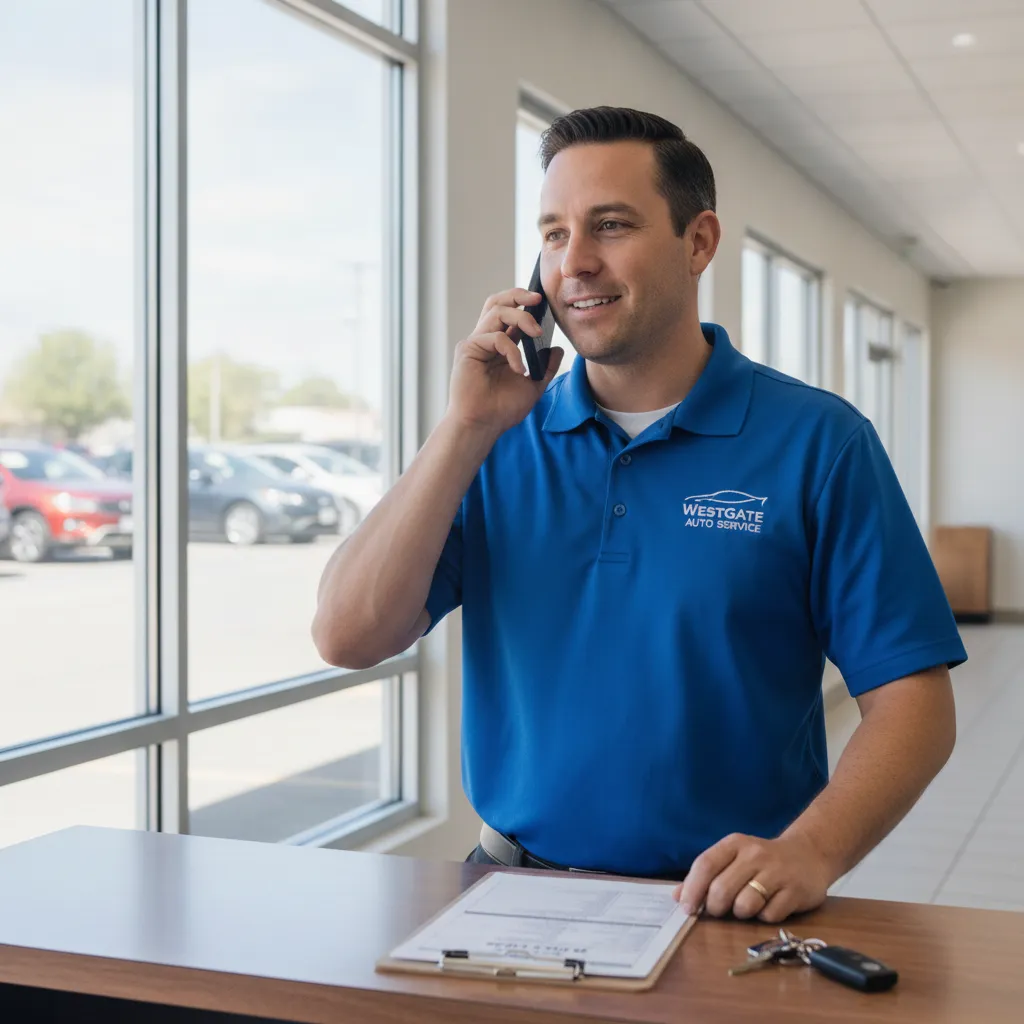
Auto Dealer Answering Service: Never Miss a Sales Call
It’s 7:40 on a Tuesday evening. Your showroom closed at seven, your service drive closed at six, and a buyer who just found the exact trim she wants on your lot is calling to ask whether it’s still there. Nobody picks up. She calls the store eleven miles down the road, someone answers, and she drives there Saturday. An auto dealer answering service exists for that hour — the window between close and open where your inventory is still searchable but your phones are not.
Dealerships lose calls differently than most local businesses. You don’t have one phone line; you have at least two very different ones. Sales calls want inventory, availability, and a test drive. Service calls want a repair-order estimate, a loaner, or an appointment. Both roll to the same dead voicemail box after hours.
Here’s where the calls actually leak, what good coverage does on each line, and how answered calls turn into the reviews that feed your next month of traffic.
Why Dealership Calls Go Unanswered on Both Lines
The gap isn’t laziness. It’s structural. A single-rooftop store has a finite number of people who can hold a phone, and the moments they can’t are exactly the moments buyers call.
- After close. Car shoppers research at night. Your inventory pages are live at 9 p.m.; your BDC is not.
- Saturday surge. The busiest showroom day is also the day every salesperson is on the lot with a customer in front of them.
- Service-drive rush. Between 7 and 9 a.m. the advisors are writing tickets, not answering ring four.
- Lunch and shift change. Two predictable dead zones every single day.
- Simultaneous calls. One receptionist can hold one line. Callers three, four, and five get a busy tone or voicemail.
Speed is what decides who wins those calls. Harvard Business Review’s study The Short Life of Online Sales Leads found that firms responding to a lead within an hour were nearly seven times likelier to have a meaningful conversation than those that waited even two hours. A car shopper comparing three stores is not the exception to that finding — she’s the textbook case.
The phone also isn’t a legacy channel here. Think with Google’s research on click-to-call behavior found 70% of mobile searchers have called a business directly from search results. For a dealership, that’s a buyer holding a VIN and your phone number at the same time.
What an Auto Dealer Answering Service Does on the Call
Taking a message is not coverage. A message means the customer waits, and a waiting customer is a customer at another store. An auto dealer answering service should move the call forward while the caller is still on the line.
Here’s what happens when InstaNexus answers. The AI receptionist greets the caller with your dealership’s name, then routes on intent — is this a sales question, a service question, parts, or a callback for a specific person? It captures the caller’s name, number, and reason for calling, and the moment the call ends it texts and emails a clean summary to whoever owns that line.
For anything schedulable, it goes further. Appointment booking offers your real open slots and confirms the test drive or service appointment during the call rather than promising someone will follow up. A genuinely urgent call — a customer stranded with a vehicle under warranty, say — warm-transfers to your on-call number instead of sitting in a queue.
And when a call does get missed on a busy Saturday, missed-call text-back sends an immediate text so the caller has a live thread instead of a dial tone. That single message often keeps the lead from moving down their list.
Sales Line vs. Service Line: Two Different Intakes
The mistake most dealerships make with coverage is running one script across two completely different conversations. The questions that qualify a buyer are useless on a service call, and vice versa.
| Sales line | Service line | |
|---|---|---|
| Caller wants | Is it still available, what’s the payment, can I drive it | When can you see it, what will it cost, do I get a loaner |
| Capture | Vehicle of interest or stock number, trade-in, timeline, financing status | Year/make/model, mileage, symptom, warranty or contract status |
| Best outcome | Test drive on the calendar | Repair order appointment with a drop-off time |
| Escalate when | Buyer is ready to negotiate numbers today | Vehicle is unsafe to drive or a customer is stranded |
Get those two intakes right and the handoff to your team is clean. Your salesperson opens the morning with a name, a stock number, and a scheduled drive. Your advisor opens with a symptom and a drop-off time instead of a voicemail that says “call me back about my car.”
For the fixed-ops side specifically, the intake logic is close to what an independent shop needs — we break that down in the auto shop answering service guide and the auto repair phone intake script. If you’re weighing the same coverage question for a standalone service department, how repair shops cover the phone lays out the four realistic options.
AI vs. a Human Service vs. Voicemail
Three ways to cover the hours your team can’t. They behave very differently once the volume is real.
- Voicemail. Free and mostly useless. Most callers won’t leave one, and the ones who do expect a callback that usually lands after they’ve already engaged another store.
- Human answering service. Real people, good at odd or emotional calls, billed per minute or per call — so an evening after a big ad drop gets expensive fast. Many can’t book into your DMS or scheduling tool, so you get a message, which is voicemail with a pulse.
- AI receptionist. Answers every simultaneous call in one or two rings, asks the same qualifying questions every time, books the drive or the RO, and warm-transfers the genuine emergency. Its weak spot is the rare call needing real improvisation.
For a store with a small BDC, the honest answer is that AI earns its keep on the after-hours and overflow calls, not by replacing your best phone person during showroom hours. We go deeper on where each option fits in the AI receptionist vs. answering service breakdown, and on daypart coverage in the after-hours answering service guide.
Turning Answered Calls Into Reviews That Compound
Answering calls fixes this month. Reviews fix next year. The two are connected more tightly at a dealership than almost anywhere else, because your review profile is what a shopper reads before they decide which of three stores to call.
Every answered call is a completed interaction you can follow up on — a delivered vehicle, a completed repair order, a good service visit. Google review automation sends the ask at the right moment, by text, right after the job is closed, so it lands while the customer still remembers the experience. Timing beats persuasion; the mechanics of the ask are covered in how to generate Google reviews for your service business.
The compounding effect is straightforward. More answered calls means more completed visits, which means more review asks, which means a stronger profile, which means more of the next month’s searchers dial you first. Missed calls break the loop at step one.
Making the Math Work for a Single-Rooftop Store
Skip the monthly-price comparison and run per-unit math instead. Front-end gross on one additional retail unit, or the gross profit on a handful of recovered repair orders, covers coverage for a long stretch. The question isn’t whether the service costs money — it’s how many calls per month you’re currently sending to voicemail.
Two ways to find that number before you commit:
- Pull your phone log for the last 30 days and count unanswered inbound calls by hour. The evening and Saturday clusters are the ones you’re paying for in lost gross.
- Route one line — after-hours, or overflow when the main line is busy — to a service for two weeks and compare booked appointments against your normal baseline.
Judge it by booked appointments and closed ROs, not by call count. A service that answers everything but books nothing is just a more expensive voicemail. See how the full setup fits a fixed-ops operation on the auto repair page, and how the volume math scales on a small team in the 24/7 answering service guide.
Frequently asked
Can an answering service handle both my sales and service lines? Yes, if it routes on intent. The greeting should identify the dealership, determine whether the caller wants sales, service, or parts, and then run the intake questions that match that line. One generic script across both lines is where most setups fall down.
Will it book into my scheduling system or just take a message? Look for real booking. A good setup checks live availability, offers open slots, and confirms the test drive or service appointment on the call. Confirm your specific DMS or scheduling tool is supported before you sign anything.
What happens when five people call at once on a Saturday? An AI receptionist answers every simultaneous call in one or two rings, so the fifth caller gets the same greeting as the first. That’s the main structural advantage over a single receptionist or a small BDC — no busy tone, no hold queue, no rollover to voicemail.
Will customers know they’re talking to AI? Some will, and that’s fine. The comparison that matters isn’t AI versus your best phone person — it’s AI versus the voicemail box that’s answering at 8 p.m. today. We cover the transparency question honestly in will customers know they’re talking to AI.
Is this worth it for a small independent lot? Often more than for a franchise store, because a small lot has fewer people to cover the phone and every unit matters more. The evening and weekend calls are where the return shows up first.
Hear It Answer a Dealership Call
Every unanswered ring after close is a buyer with your competitor’s number already dialed. InstaNexus AI answers every inbound call around the clock, routes sales and service separately, captures the caller’s name, number, and reason for calling, books the appointment, and texts and emails you a summary the moment the call ends. Book a demo and hear it handle a call for your store.