HVAC Virtual Receptionist: What It Does for Your Shop
It’s 7:42 on a 98-degree afternoon, your phone rings while you’re shoulder-deep in a condenser, and you let it go to voicemail. That caller is one of six to eight people who tried your shop today and probably won’t try again. An HVAC virtual receptionist answers that call the moment you can’t, qualifies the job, and gets it on your calendar before the homeowner dials the next contractor on their list.
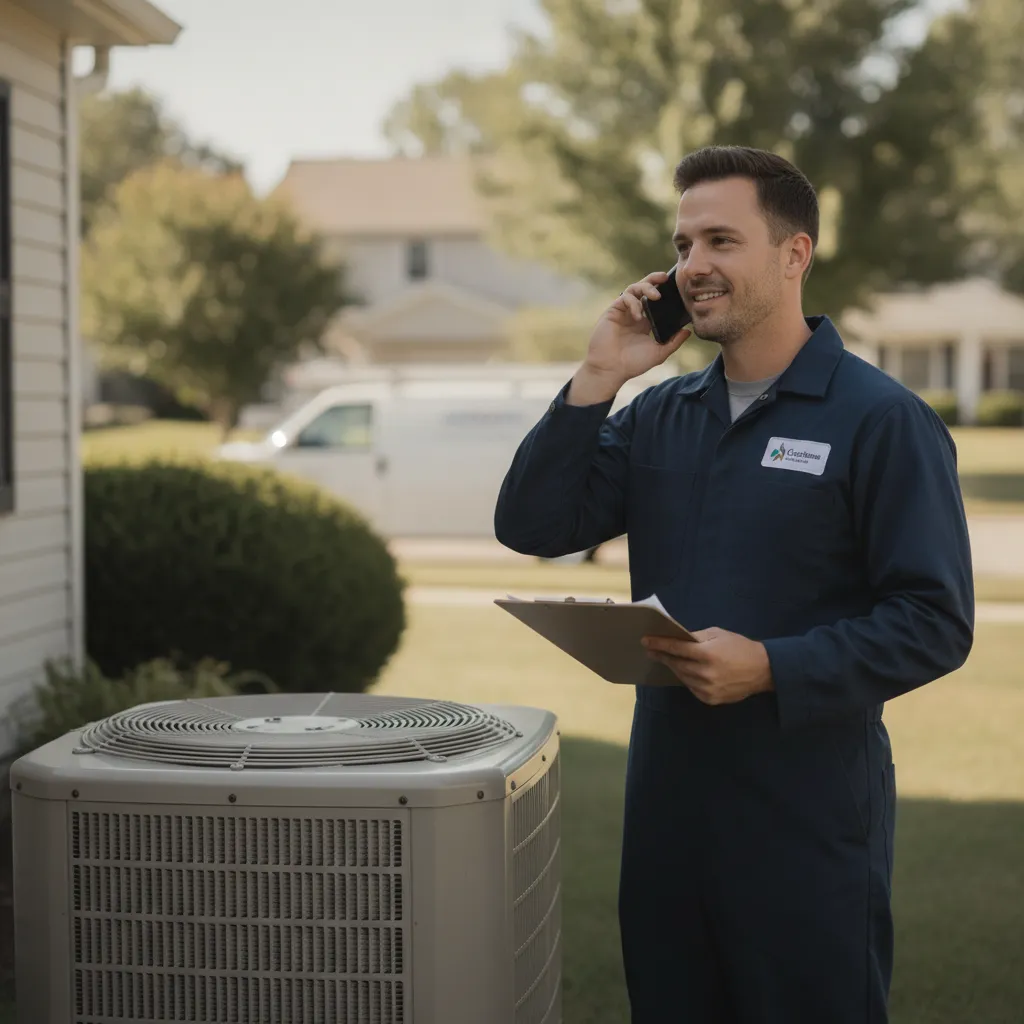
This is a plain-English overview of what an HVAC virtual receptionist is, what it does on a live call, and how to tell whether it fits the way your shop already runs. If you want the short version of how we approach the trade, start with our HVAC solutions page.
What an HVAC virtual receptionist actually does on a call
A virtual receptionist is a phone-answering layer that picks up when your team can’t, sounds like a competent front-office person, and follows the same intake your best dispatcher would. For an HVAC shop, that means it does four things on every call:
- Answers on the first or second ring, day or night, including the calls that hit during a service window, a lunch run, or a 2 AM no-cool emergency.
- Qualifies the job by capturing the details that decide priority and routing: address and service area, system type and approximate age, the symptom (no cooling, no heat, strange noise, water leak), and whether anyone is in distress.
- Flags true emergencies and follows your escalation rule, whether that’s texting the on-call tech or routing straight to your cell.
- Books or schedules the visit into your calendar, or takes a complete message with a callback time the customer agrees to.
The point isn’t to replace the human relationship. It’s to make sure the phone is never the reason a job walks to the shop down the street.
Why HVAC shops lose so many calls in the first place
HVAC is a phone-driven trade with brutal timing. Your busiest call hours are exactly the hours your techs are on a roof, in an attic, or driving between jobs. Demand spikes in the first heat wave and the first hard freeze, and that’s precisely when every other shop in town is slammed too.
The customer behavior makes it worse. When a home loses cooling or heat, the homeowner isn’t shopping leisurely. They call, and if they reach voicemail, most of them simply call the next number. BrightLocal’s ongoing consumer research finds the phone remains one of the top ways people reach local service businesses, which means a missed call is often a missed customer, not a postponed one. (See BrightLocal’s Local Consumer Review Survey for the underlying data.)
Run the math on your own shop. If your average completed HVAC ticket is a few hundred dollars and you miss even five qualified calls a week, the annual leakage is well into five figures. We walk through that number in detail in the after-hours HVAC call cost breakdown.
Virtual receptionist vs. a traditional HVAC answering service
“Virtual receptionist” and “answering service” get used interchangeably, but they describe a spectrum. It helps to know where any option you’re shopping actually sits. If you’re starting from the basics, our rundown of an answering service for HVAC covers what one does before you weigh it against a receptionist. Once you’re ready to compare providers head to head, our guide on how to choose the best HVAC answering service lays out the criteria that matter.
| Option | How it answers | Best for |
|---|---|---|
| Voicemail | Recording, no live interaction | Nothing in a trade where speed wins |
| Traditional answering service | Live human reads a generic script, takes a message | Overflow and message-taking |
| HVAC virtual receptionist (AI) | Trades-literate intake, qualifies and books on the spot | Shops that want every call handled like a real dispatcher would |
A generic call center can take a message. A purpose-built HVAC virtual receptionist understands the difference between “my AC is blowing warm” and “I smell gas,” and it acts accordingly. For a deeper side-by-side, see our HVAC call answering service comparison and the pillar guide on AI receptionist vs. answering service.
What it should capture on every HVAC call
The value of any answering service for an HVAC company is in the completeness of the intake. A message that says “call back about AC” is nearly worthless. A good virtual receptionist captures the same fields your dispatcher would ask for:
- Caller name and best callback number (and whether they prefer a text).
- Service address and confirmation it’s inside your service area.
- System type and rough age (central AC, heat pump, furnace, mini-split, rooftop unit).
- The symptom in the customer’s words, plus how long it’s been happening.
- Urgency signals such as no cooling with a vulnerable household member, no heat in freezing weather, or any safety concern.
- Preferred window and whether they’re an existing customer or a referral.
That structure is what turns a 90-second phone call into a job your tech can roll to without three rounds of phone tag. It’s the same discipline we cover in our AI HVAC answering service overview.
When a virtual receptionist is worth it for an HVAC business
You don’t need one if you have a full-time front-office person who never misses a call and never sleeps. Almost no independent HVAC shop is in that position. Consider a virtual receptionist when any of these are true:
- You routinely send calls to voicemail during service hours because everyone is on a job.
- After-hours and weekend calls go unanswered, and you suspect some were emergencies worth a premium rate — the exact leak a 24/7 answering service for a small shop is meant to plug.
- Seasonal spikes overwhelm whoever normally answers the phone.
- You’re paying a per-minute answering service that takes messages but doesn’t actually book anything.
The bar to clear is simple. If the virtual receptionist books or saves more jobs in a month than it costs, it pays for itself. In a trade where one captured emergency replacement can be a four-figure ticket, that bar is low. The same arithmetic runs in the trades next door, where an answering service for electricians clears its monthly cost on a single saved panel upgrade.
What a virtual receptionist needs to know about your shop
A virtual receptionist is only as good as what it’s told about how you operate. Rather than a long onboarding process, think of it as a set of inputs: your service area and hours, your pricing or diagnostic-fee policy at a high level, your emergency-escalation rule, the questions you want asked on every call, and how you want jobs handed off (calendar booking, text to the on-call tech, or a structured message). Get those inputs right and the receptionist sounds like it has worked your front desk for years.
Frequently asked
Q: What is an HVAC virtual receptionist? A: It’s a phone-answering service built for HVAC shops that picks up calls you can’t, asks the same qualifying questions your dispatcher would, flags emergencies, and books or schedules the visit. It works during business hours, after hours, and through seasonal spikes.
Q: Is a virtual receptionist the same as an HVAC answering service? A: They overlap. A traditional answering service mostly takes messages with a generic script. A modern HVAC virtual receptionist runs a trades-specific intake and can qualify and book the job on the spot, not just leave you a callback note.
Q: Can it handle after-hours no-cool and no-heat emergencies? A: Yes. A well-configured virtual receptionist captures the emergency details, follows your escalation rule, and routes urgent calls to your on-call tech while scheduling the non-urgent ones for the next available window.
Q: How much does an HVAC virtual receptionist cost? A: Pricing varies by provider and call volume. The practical test is whether it captures more booked work in a month than it costs. For most shops, a single saved emergency replacement covers the service for a long stretch.
See it answer a call the way your best dispatcher would
InstaNexus AI is a virtual receptionist built for HVAC shops: it answers every service call, qualifies the job with trades-literate questions, flags the emergencies, and books the work so you stop losing customers to voicemail. The fastest way to judge it is to hear it run your own intake.