Follow Up Call Script Templates for Estimates, No-Shows and Past Customers
When researchers sent test leads to 2,241 U.S. companies, 23% never responded at all, according to the study behind Harvard Business Review’s “The Short Life of Online Sales Leads”. That’s the first call. The second call, the follow-up on an open estimate or a missed appointment, gets skipped even more often. A follow up call script fixes the real reason it gets skipped: nobody on the team knows what to say, so the call feels awkward and slides to tomorrow.
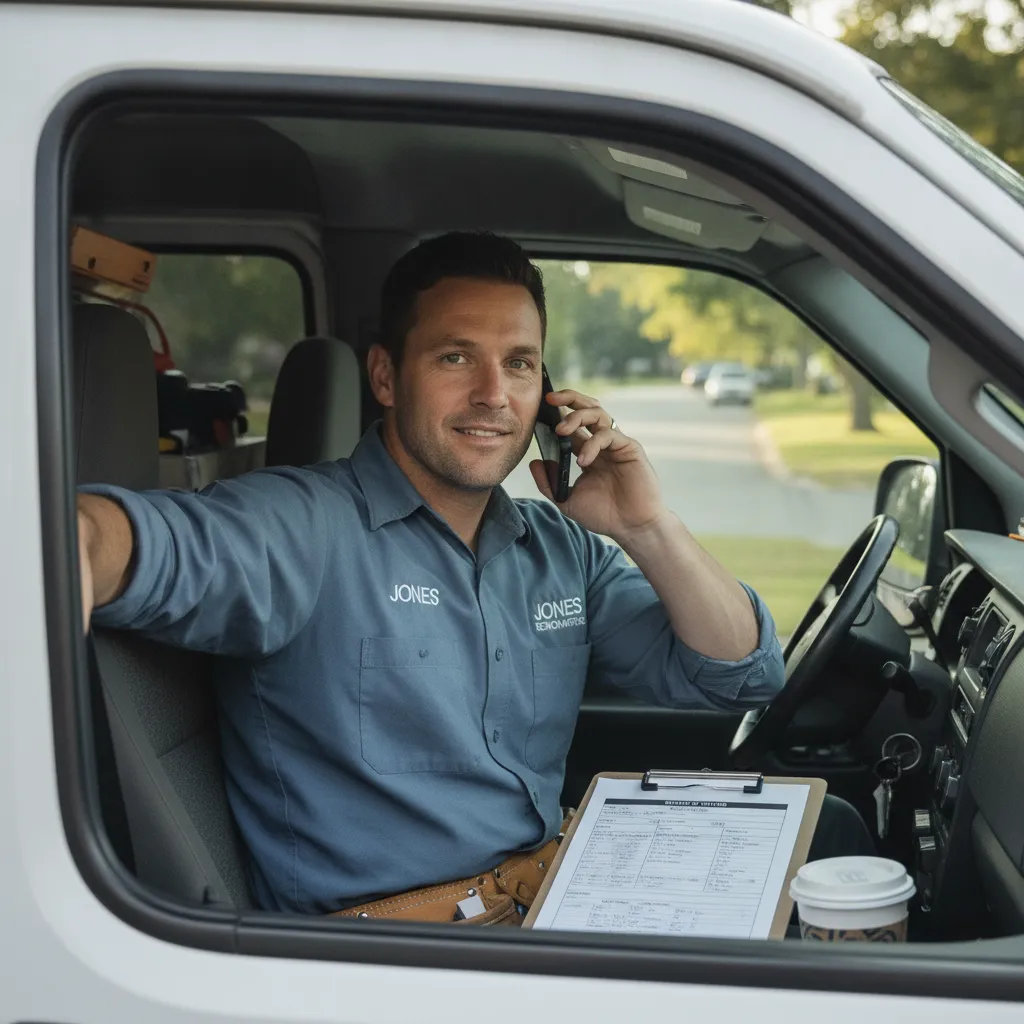
This post gives you the words for the four follow-ups a service shop makes every week: the open estimate, the no-show, the post-job check-in, and the past customer you haven’t heard from in a year. Each script is short enough to use from the truck.
Change the bracketed parts. Keep the structure.
Why follow-up calls get skipped
Most owners don’t skip follow-ups because they think they don’t matter. They skip them because the call has no clear opening, no clear ask, and a real chance of hearing “no.” So it goes on a sticky note and dies there.
A good script solves three problems at once:
- It gives you a reason to call. “Just checking in” isn’t a reason. “Your quote expires Friday” is.
- It makes one ask. Book the job, pick a new time, or say no. One question, not three.
- It makes “no” easy. People dodge calls they think will turn into a pressure pitch. A script that lets them say no politely gets more yeses.
If you need the intake side first, our call script templates by trade cover the greeting and qualifying questions. The scripts below pick up after that first call.
Follow up call script 1: The open estimate
This is the money script. You drove out, measured, priced the job, and the homeowner said “let me think about it.” Every day that estimate sits, the odds that they book someone else go up.
Call within two to three business days. Sooner feels pushy; later and they’ve often moved on.
“Hi [Name], it’s [Your name] from [Company]. I was out at your place on [day] to look at the [job]. I wanted to make sure the quote made sense and see if any questions came up since then.”
Then stop talking. Let them answer. If they hesitate:
“Totally fine if you’re still comparing. Is it the price, the timing, or something about the scope? If I know which one, I can tell you whether there’s any room to adjust.”
If they’re ready:
“Great. I’ve got [day] or [day] open for the install. Which works better?”
If they say no:
“Thanks for telling me straight. If anything changes, the quote’s good until [date], and you’ve got my number.”
That last line matters. A clean “no” leaves the door open. A sulky one closes it.
When the first call goes to voicemail
Leave a 15-second message with one reason to call back, then send a text with the same information. Most people would rather reply to a text than return a call.
“Hi [Name], [Your name] from [Company] about the [job] quote. I’ve got an install slot open [day] if you want it. Call or text me back at [number]. Thanks.”
Try again in three to four days. After three attempts with no reply, move the lead to your seasonal reactivation list instead of calling a fourth time.
Script 2: The no-show or missed appointment
The tech showed up, nobody was home, and the slot is gone. The goal of this call isn’t to scold. It’s to get them back on the calendar before they forget why they called you.
“Hi [Name], this is [Your name] from [Company]. [Tech] stopped by at [time] for your [service] and we couldn’t connect. No problem, these things happen. I want to get you rescheduled before the calendar fills up. I have [day/time] or [day/time]. Which is better?”
If they’re apologetic, take the out:
“Don’t worry about it at all. Let’s just get you locked in.”
If your shop charges a trip fee for no-shows, say so once, plainly, and don’t argue about it on the call:
“Just so you know, we do have a [amount] trip charge for missed visits. I’ll note it on the work order and the tech can walk you through it.”
If no-shows are a pattern, the fix is upstream: a confirmation text the day before and an “on my way” text from the tech. That stops most missed visits before they happen.
Script 3: The customer service follow up call after a job
This is the call most shops never make, and it’s the easiest one. Two to five days after the job, call to make sure the work held up. This customer service follow up call script does three jobs: it catches problems early, it shows you care about the work, and it sets up a review ask.
“Hi [Name], [Your name] from [Company]. [Tech] was out on [day] for the [job]. I’m calling to make sure everything’s working the way it should. How’s it holding up?”
If something’s wrong:
“I’m glad you told me. Let me get [Tech] back out to take a look. I have [day/time]. Does that work?”
Fix it fast. A callback handled well often earns a better review than a job that went perfectly.
If everything’s fine:
“Good to hear. One quick favor: if you were happy with [Tech], a Google review helps us a lot. I can text you the link right now. Would that be OK?”
Only ask for the review when the answer to “how’s it holding up” was good. For the exact wording and timing of that ask, see how to ask for a Google review.
Sales follow up call script for past customers
Your old customer list is the cheapest pipeline you have. These people already trust you. They just haven’t thought about you since the last job.
Give them a specific, seasonal reason to hear from you. A generic “anything we can help with?” gets a generic “no.”
| Trade | Reason to call |
|---|---|
| HVAC | Pre-season tune-up before summer or winter |
| Plumbing | Water heater age check, 8 to 12 years after install |
| Roofing | Post-storm inspection after a hail or wind event |
| Auto repair | Mileage-based service due from the last visit |
| General contractors | One-year walkthrough after a remodel |
The script:
“Hi [Name], it’s [Your name] from [Company]. We [did your job] back in [month/year]. [Seasonal reason], so I’m calling a few customers to get on the schedule before things get busy. Want me to put you down for [day]?”
If they decline:
“No problem. Should I check back in [season], or would you rather I take you off the call list?”
Offering to take them off the list is the line that keeps this from feeling like telemarketing. Most people say “check back,” and now you have permission.
Calling a few hundred past customers by hand isn’t realistic for most shops. That’s where a texting sequence does the first touch and you only call the people who reply. Our reactivation campaigns run that sequence from a list you upload, and the roofing lead reactivation post walks through what the timing looks like in a seasonal trade.
How often to follow up, and when to stop
Persistence wins, until it turns into pestering. A simple cadence most shops can hold to:
- Day 2 or 3: first call. Voicemail plus text if no answer.
- Day 6 or 7: second call, new reason (“the slot I mentioned opened up,” “the quote expires Friday”).
- Day 14: final text. “I’ll close this out so I’m not bugging you. The quote’s good until [date].”
- After that: move them to the seasonal list. Don’t call again until there’s a real reason.
Three touches in two weeks is enough for an estimate. For past customers, once or twice a year is plenty.
Track the result of each call on the job or lead record, even if it’s just “no answer,” “booked,” or “chose someone else.” After a month you’ll see where estimates are actually dying, which tells you more than any script will.
The follow-up only works if the first call got answered
None of these scripts help with the lead who called while you were on a roof and never called back. That caller didn’t get an estimate, so there’s nothing to follow up on. Answering speed comes first; follow-up is how you close what you answered.
That’s where an AI receptionist earns its keep. InstaNexus answers calls 24/7, captures each caller’s name, number and reason for calling, and sends you an SMS and email summary with the transcript when the call ends. It can book open slots into Google Calendar during the call and warm-transfer urgent calls to whoever is on call. If you’re weighing that against a live service, start with the AI receptionist vs answering service comparison.
For the harder calls that come up during follow-up, like price pushback or a complaint, use our customer service scripts. For trade-specific intake, the HVAC and plumbing pages show how the first call should run.
Frequently asked
Q: What should a follow up call script include? A: A specific reason for the call, one clear ask, and an easy way to say no. Open by reminding the customer who you are and what job you’re calling about, ask one question, and end with a next step and a date.
Q: How long should you wait to follow up on an estimate? A: Two to three business days after you deliver the quote is a good default. That gives the homeowner time to review it without letting them forget you. Follow up again around day seven, then send a final text around day fourteen.
Q: How many times should you follow up before giving up? A: Three touches over about two weeks works for most service estimates. After that, move the lead to a seasonal reactivation list rather than continuing to call.
Q: Is it better to call or text for a follow-up? A: Use both. Call first, because a conversation surfaces objections a text never will. If they don’t pick up, leave a short voicemail and send a text with the same information right after.
Stop losing jobs between the first call and the follow-up
Follow-up closes the leads you answered. InstaNexus makes sure every caller gets answered, captured and booked, so there’s always a lead to follow up on. Book a demo and we’ll show you how it handles your after-hours and overflow calls.