HVAC Specialty Answering Service: Why Generic Call Centers Lose Jobs
A generic call center takes a name and a number. An HVAC specialty answering service knows that “the upstairs won’t cool and the breaker keeps tripping” is a same-day call, not a Monday callback. That gap is the difference between a booked repair and a lead that called the next shop before your message even reached you.
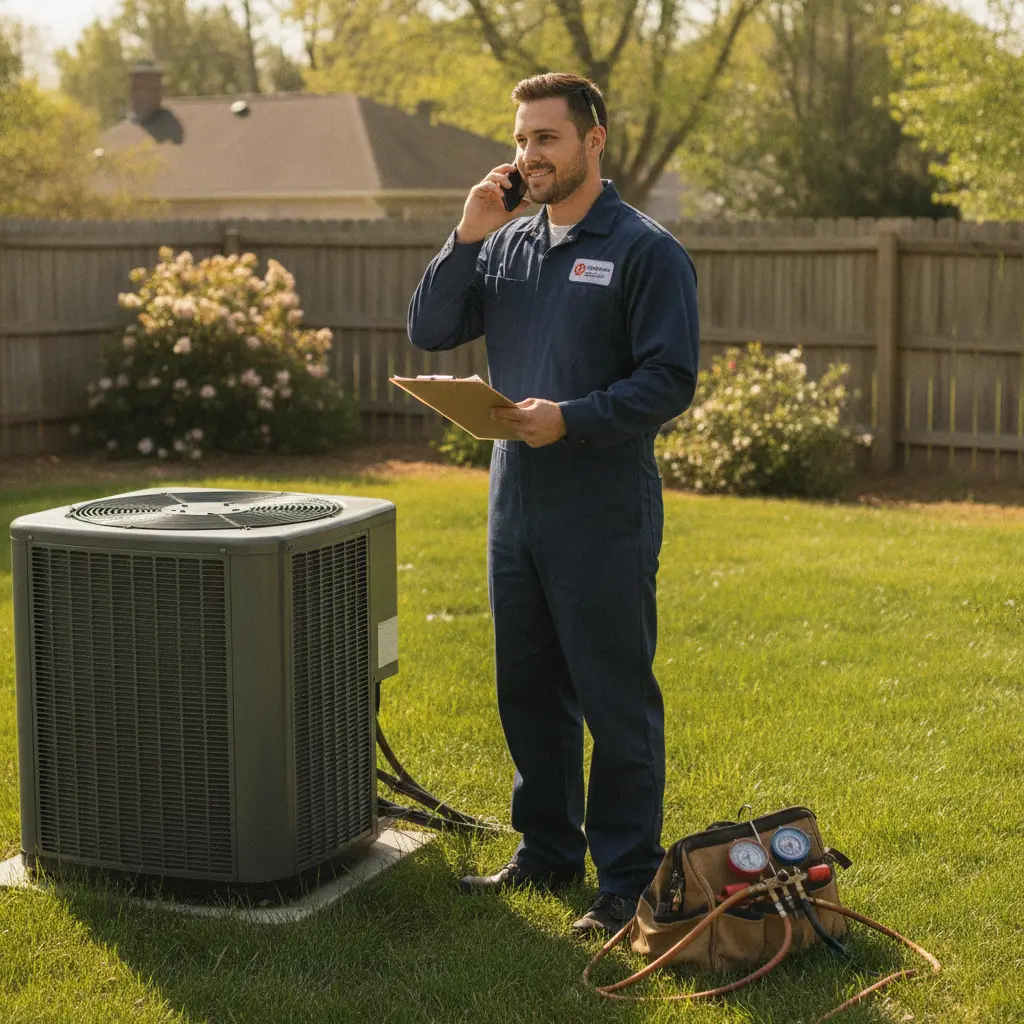
Most answering services are built to handle a hundred industries with one script. A dentist, a law office, and a heating shop all get the same “may I take a message?” That works fine for the dentist. For an HVAC shop in a heat wave, a generalist script can’t tell a routine tune-up from a no-heat emergency with a newborn in the house, and it books both the same way: badly, or not at all.
This post breaks down what makes an HVAC specialty answering service actually specialized, the intake a generalist can’t run, and how to test whether the service on your line knows heating and cooling or just knows how to read a phone number back to you.
What Makes an HVAC Specialty Answering Service Different
Specialization isn’t a logo on the welcome screen. It’s the script, the urgency rules, and the booking logic underneath. A true HVAC specialty answering service is built around how heating and cooling work gets dispatched, not around a one-size template.
Three things separate a specialist from a generalist:
- A trade-literate intake. It asks about system type, rough age, and the actual symptom in the caller’s words, because those answers decide whether you roll a repair truck, quote a replacement, or send a tune-up.
- HVAC urgency rules. It knows that “no cool” in July and “no heat” in January are emergencies, while a noisy fan or a scheduled maintenance call can wait for business hours.
- Booking into your dispatch. It puts the appointment on the calendar your techs already run, respecting your service area and your blackout windows, instead of leaving a sticky note for someone to call back.
A generic service skips all three because it can’t afford to learn one trade deeply when it’s answering for forty. That’s not a knock on the agents — it’s the math of a call center that has to be a generalist to stay in business.
The Intake a Generalist Can’t Run
The clearest test of specialization is the intake. Pull the questions a service asks on an HVAC call and you’ll know in thirty seconds whether it understands the trade.
A generalist captures the bare minimum: name, number, “what’s this regarding?” Then it emails you a message and you call back to run the real intake yourself — which is the work you were trying to hand off in the first place.
An HVAC specialty answering service runs the full intake on the first call:
| Field | Why it changes the dispatch |
|---|---|
| Symptom in plain words | ”Smells like burning” is an emergency; “due for a tune-up” is not |
| System type and age | A 20-year-old unit is a replacement quote, not a repair |
| Heating vs. cooling | Routes the right tech and the right urgency for the season |
| Indoor temperature and occupants | Infants, elderly, or medical needs bump priority |
| Service address and ZIP | Out-of-area calls get a polite decline, not a wasted truck roll |
| Best callback number, captured early | A dropped call still leaves you a workable lead |
That structured lead is the whole point. The morning crew rolls up already knowing it’s a no-cool call on an aging condenser, not “John, something about the AC, call him back.” For the deeper catalog of what a trained script captures, see what an AI receptionist for HVAC captures on every call, and for the plain-English version of the category, our overview of what an answering service for HVAC does covers the basics.
Why HVAC Call Patterns Punish Generic Services
HVAC demand doesn’t spread evenly, and that’s exactly where a generic answering service falls apart. Your calls spike on the hottest and coldest days — the same days every tech is already on a roof and every competitor in town is buried too.
Skilled techs are scarce, so the front desk is the first seat a growing shop leaves unstaffed. The U.S. Bureau of Labor Statistics counts roughly 415,800 heating, air-conditioning, and refrigeration mechanics and installers nationwide, with tens of thousands of openings projected every year. When the heat wave hits, the phone rings into an empty office while the only person who could answer it is billing on a rooftop.
A homeowner with a dead condenser found you ninety seconds ago and feels zero loyalty. If a generalist agent fumbles the intake or just takes a message, that caller is dialing the next result before the voicemail beep finishes. The research is blunt on this: Harvard Business Review’s study on the short life of online sales leads found firms that responded within an hour were nearly seven times more likely to reach a decision-maker than those who waited just sixty minutes longer. For a no-cool call, an hour is a lifetime.
Specialty Doesn’t Have to Mean a Human Call Center
Here’s the part most owners miss. For years, “HVAC specialty answering service” meant a human call center that trained its agents on heating and cooling — and charged per message for the privilege. That’s a real upgrade over voicemail, but it still usually ends in a message you have to call back on.
An AI voice receptionist changes the trade-off. It answers on the first ring, runs the full heating-and-cooling intake every single time, and books the slot during the call instead of taking a message. Every call gets the specialist script, not just the ones that reach a well-trained agent on a slow day. The difference between human and AI for HVAC specifically is laid out in our pillar on AI receptionist vs. answering service, and a side-by-side of how to weigh the options is in the best HVAC answering service guide.
Whichever route you choose, the test is the same: does it run your intake, book on your calendar, and escalate a real emergency to a live tech? A specialist that can’t do those three is just a generalist with better marketing.
How to Test a Service Before You Commit
You don’t have to take anyone’s word for “specialized.” Run a real call through it and listen. The HVAC answering service buyer’s checklist walks through this in depth, but four checks tell you most of what you need to know:
- Real intake, not a message pad. Does it ask system type, urgency, and ZIP — or just name and number?
- Booking on the call. Does it put the appointment on your calendar during the conversation, or promise a callback?
- A real escalation path. Does a genuine no-heat emergency warm-transfer to your on-call tech, with a transcript fallback if nobody picks up?
- You control the script. Can you define your service area, your hours, and what “urgent” means for your shop?
If a service nails those four, it’s a specialist whether it’s staffed by people or AI. If it stumbles on the first one, no amount of HVAC branding will save the calls you’re losing.
Frequently Asked
What is an HVAC specialty answering service? It’s an answering service built specifically for heating and cooling calls — one that runs a trade-literate intake (system type, symptom, urgency, ZIP), books into your dispatch calendar, and escalates genuine emergencies to a tech, instead of taking a generic message like a multi-industry call center.
Is a specialty service worth it over a regular answering service? For HVAC, usually yes. A generalist books the wrong jobs and misses the ones that pay because it can’t tell a tune-up from a total outage. A specialist captures the dispatch-ready details on the first call, which is where the booked revenue actually lives.
Can an AI handle HVAC calls as well as a trained human agent? An AI voice receptionist runs the same specialist intake on every call, answers on the first ring, and books the slot live — then warm-transfers true emergencies to your on-call tech. Many shops use AI for volume and reserve human handoff for the calls that genuinely need a person.
Will I have to change my phone number? No. You forward your existing published line to the service or use a forwarding number you control. The number on your trucks and your Google listing stays exactly the same.
Hear It Run a No-Cool Call
The only way to know a service is truly specialized is to hear it handle your kind of call. Book a 15-minute demo and listen to an AI receptionist run a real heating-and-cooling intake on your own line — symptom, system, urgency, address, and a booked slot on your calendar. The HVAC receptionist page lays out the call examples and integrations alongside it.